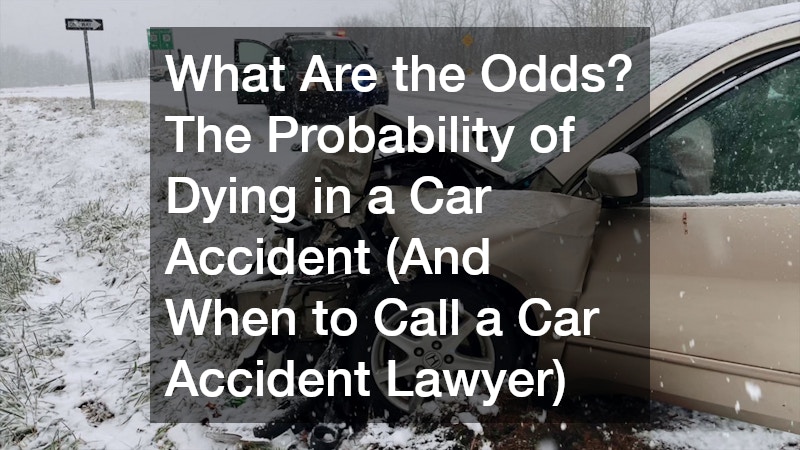
Most people dramatically overestimate their chances of dying in a car crash. News headlines and viral videos make fatal accidents feel constant and unavoidable. In reality, the lifetime odds of dying in a motor vehicle crash in the United States are roughly 1 in 100. That number isn’t insignificant, but it also means the overwhelming majority of crashes are survivable.
It helps to separate annual risk from lifetime probability. In any given year, your chances of dying in a crash are relatively low.
However, when you factor in decades of driving, the cumulative risk increases. That’s where the ”1 in 100” statistic comes from.
It’s also important to distinguish between total crashes and fatal crashes. Millions of collisions happen each year. Only a small percentage result in death. Even among serious crashes, survival rates are much higher today than they were decades ago, thanks to better trauma care, safer vehicles, and improved road design.
Understanding these numbers isn’t about minimizing danger. It’s about replacing fear with informed awareness.
The Factors That Increase Risk More Than Most Drivers Realize
Not all driving situations carry equal risk. Certain behaviors and conditions dramatically increase the likelihood of a fatal outcome.
Speed, for example, changes everything. A crash at 40 mph generates exponentially more force than one at 25 mph. That force translates directly into injury severity.
Other major risk amplifiers include:
- Driving under the influence of alcohol or drugs
- Not wearing a seatbelt
- Driving late at night, especially between midnight and 3 a.m.
- Rural highways where emergency response times are longer
- Distracted driving, particularly texting
Imagine two scenarios. In one, a driver is buckled, alert, traveling within the speed limit in a modern sedan. In another, a driver is speeding on a rural road at night without a seatbelt. The statistical difference in survival between those two situations is dramatic.
The takeaway isn’t complicated: small daily decisions compound over time. Risk isn’t evenly distributed; it’s shaped by behavior.
How Modern Safety Measures Dramatically Improve Survival Rates
Today’s vehicles are engineered with survival in mind. Crumple zones absorb impact energy. Airbags deploy within milliseconds. Electronic stability control reduces rollover risk.
But technology only works if drivers use it correctly.
Seatbelts alone reduce the risk of death for front-seat passengers by roughly 45 percent. That is one of the most significant safety improvements in automotive history. Airbags are designed to work with seatbelts, not replace them. Without a seatbelt, airbags can even cause injury.
Beyond equipment, defensive habits matter:
- Keep a safe following distance
- Avoid aggressive lane changes
- Slow down in poor weather
- Assume other drivers may make mistakes
You cannot control every variable on the road. But you can consistently reduce your personal risk profile.
What to Do Immediately After a Serious Crash
A collision is disorienting. Adrenaline surges. Your hands may shake. In those first minutes, clear thinking is difficult—but crucial.
If you’re physically able, follow these steps:
- Call emergency services immediately.
- Seek medical evaluation, even if injuries seem minor.
- Document the scene with photos and video.
- Exchange information without admitting fault.
Some injuries, such as internal bleeding or concussions, do not present obvious symptoms right away. It’s common for people to say, ”I feel fine,” only to experience severe pain hours later.
This is also when legal considerations begin to matter. Statements made at the scene or to insurance adjusters can influence future claims. In severe crashes involving major injuries or fatalities, speaking with a car accident lawyer early can help preserve evidence and protect your rights before crucial details are lost.
When a Fatal Accident Leads to a Wrongful Death Claim
When a crash results in death, families are left with grief layered on top of financial uncertainty. Medical bills, funeral expenses, and lost income can quickly create overwhelming pressure.
Wrongful death claims are designed to provide compensation when negligence caused the fatal crash. That negligence might involve:
- A drunk driver
- A distracted commercial truck operator
- A manufacturer’s defect
- Poorly maintained road conditions
Eligibility to file varies by state, but typically, immediate family members may bring the claim. Compensation can include lost future earnings, medical costs, and non-economic damages such as loss of companionship.
These cases often require detailed accident reconstruction and expert testimony. Establishing liability is rarely as simple as it appears from the outside.
How Insurance Companies Evaluate Severe Injury Claims
After a serious crash, many people assume the insurance company will ”do the right thing.” Unfortunately, insurers are businesses focused on minimizing payouts.
Adjusters evaluate claims based on:
- Medical documentation
- Evidence of fault
- Severity and permanence of injuries
- Policy limits
Initial settlement offers frequently undervalue long-term consequences. For example, a traumatic brain injury may appear mild at first but develop into persistent cognitive challenges that affect earning capacity.
When injuries are catastrophic or liability is disputed, a car accident lawyer can negotiate on your behalf and push back against low offers. Legal representation often changes the tone and seriousness of discussions with insurers.
Recognizing When Legal Help Becomes Essential
Not every accident requires an attorney. A minor fender-bender with no injuries can often be resolved through standard insurance procedures.
However, certain warning signs suggest you should seek legal guidance:
- Severe or permanent injuries
- A fatality
- Disputed fault
- Multiple vehicles involved
- Commercial trucks or corporate defendants
- Insurance denial or delayed payments
Consider a scenario where two drivers blame each other for running a red light. Without independent witnesses or camera footage, the dispute can stall compensation for months. In these situations, early legal intervention may prevent costly delays.
The goal isn’t to escalate conflict unnecessarily. It’s to ensure you are not navigating a complex system alone during one of the most stressful moments of your life.
Putting the Odds in Perspective
The probability of dying in a car accident is real, but it is not a daily inevitability. Risk is shaped by choices, environment, and preparation. Safer driving habits, modern vehicle technology, and informed post-crash decisions significantly improve outcomes.
Statistics are useful, but they should empower rather than frighten you. Drive attentively. Protect yourself with seatbelts and responsible habits. And if the unthinkable happens, know that support—medical, financial, and legal—exists to help you move forward.